

What Should You Eat Before and After a Workout?
What Should You Eat Before and After a Workout? A Science-Based Guide to Nutrition, Performance & Recovery
Whether your goal is to build muscle, improve strength, increase endurance, or simply get more out of your workouts, what you eat before and after exercise can influence how your body performs and recovers. But with so much conflicting nutrition advice, it’s not always clear what actually works.
Should you eat carbohydrates before training? Is protein more important after a workout? Do you really need to drink a protein shake within 30 minutes of finishing your last set?
The answers are more nuanced than many popular fitness claims suggest.
Scientific research shows that total daily nutrition, protein intake, carbohydrate availability, and meal timing all contribute to exercise performance and recovery. However, their importance varies depending on your training intensity, duration, and individual goals. Understanding how these nutrients work together can help you make better decisions about fueling your workouts and supporting recovery.
What Should You Eat Before a Workout?
The primary goal of pre-workout nutrition is to provide your body with sufficient energy to perform effectively while minimizing digestive discomfort. Although individual needs vary, carbohydrates and protein are two important nutrients to consider before exercise.
1. Carbohydrates: Fuel for Exercise Performance
Carbohydrates are broken down into glucose, which your body can use immediately for energy or store as glycogen in the muscles and liver.
During moderate- to high-intensity exercise, muscle glycogen is an important energy source. Having adequate carbohydrate availability can help maintain performance, particularly during longer or more demanding workouts.
A 2026 systematic review examining carbohydrate consumption during endurance exercise found evidence of performance benefits, particularly during exercise lasting between one and four hours, although the certainty of the underlying evidence varied.
This doesn’t mean everyone needs a large carbohydrate meal before training. A 45-minute strength workout may have different fueling requirements than a two-hour endurance session.
Good pre-workout carbohydrate sources include:
- Bananas and other fruits
- Oatmeal
- Rice
- Whole-grain toast
- Potatoes or sweet potatoes
- Low-fibre cereals
For workouts beginning shortly after eating, easily digestible carbohydrates may be more comfortable than large, fibre-rich meals.
2. Protein Before a Workout: Does It Matter?
While carbohydrates help fuel exercise, protein supplies the amino acids necessary for muscle maintenance, repair, and growth. Resistance training stimulates muscle protein synthesis, the biological process through which the body builds and remodels muscle proteins. Consuming protein before exercise can provide amino acids that remain available during training and into the recovery period.
A 2025 systematic review and meta-analysis comparing protein intake before and after resistance training found no meaningful difference in lean body mass gains between the two approaches. This suggests that consuming protein before exercise can support muscle-building goals without requiring an additional protein serving immediately afterward.
Good pre-workout protein sources include:
- Greek yogurt
- Eggs
- Chicken or turkey
- Cottage cheese
- Whey protein
- Tofu
For many exercising adults, approximately 20–40 grams of high-quality protein per meal is a practical target, although individual requirements depend on body size, training demands, and total daily intake.
3. Can You Drink a Protein Shake Before a Workout?
Absolutely. A protein shake can be a convenient option when you don’t have time to prepare a full meal.
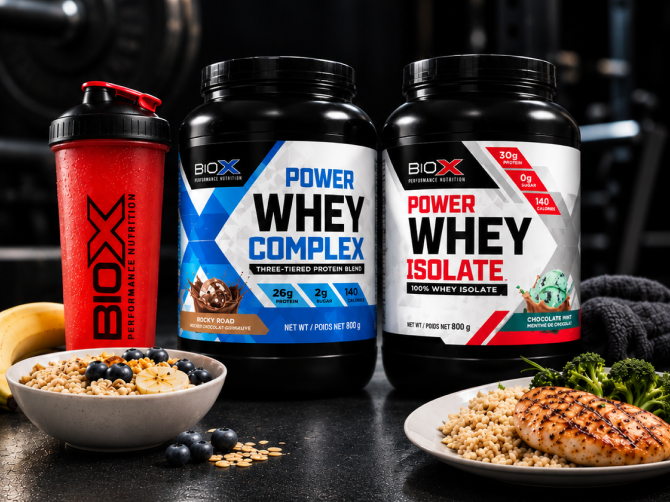
For individuals with busy schedules, BIOX Power Whey Isolate offers a practical way to incorporate whey protein into their pre-workout nutrition routine. Whey protein contains all nine essential amino acids, including leucine, which plays an important role in activating muscle protein synthesis.
For a more balanced pre-workout option, consider pairing a BIOX protein shake with a banana, oatmeal, or another carbohydrate source.
While protein contributes to muscle maintenance and adaptation, carbohydrates can help provide the energy needed for demanding training sessions. A protein shake isn’t necessary before every workout, but it can be a convenient way to help meet your daily protein requirements.
4. When Should You Eat Before a Workout?
The timing of your pre-workout meal should account for digestion, comfort, and the type of exercise you’re performing.
2–3 hours before exercise: Consider a balanced meal containing carbohydrates, protein, and moderate amounts of fat.
60–90 minutes before exercise: A smaller meal or snack containing carbohydrates and some protein may be easier to digest.
15–30 minutes before exercise: If needed, a light carbohydrate snack, such as a banana, may provide a convenient source of energy.
These are practical guidelines rather than strict rules.
Large meals high in fat or fibre immediately before vigorous exercise may cause digestive discomfort in some individuals. The best pre-workout meal is one that provides sufficient energy without leaving you feeling overly full or uncomfortable.
What Should You Eat After a Workout?
Post-workout nutrition helps replenish nutrients used during exercise and provides the building blocks necessary for recovery. Two important considerations are protein intake and carbohydrate replenishment.
1. Protein After a Workout: How Much Do You Need?
Following resistance training, muscle tissue becomes more responsive to amino acids, making protein intake an important component of recovery. Protein provides essential amino acids, including leucine, which helps activate pathways involved in muscle protein synthesis.
A 2026 systematic review and network meta-analysis examining 51 trials found that several animal- and plant-based protein sources stimulated muscle protein synthesis following resistance exercise.
Whey protein demonstrated a statistically significant effect in the standard network analysis, although the certainty of evidence varied between comparisons. For many healthy adults engaged in resistance training, 20–40 grams of high-quality protein after exercise is a reasonable starting point.
However, this is not a universal maximum. Individual protein needs depend on body size, age, training demands, and overall dietary intake.
Good post-workout protein sources include:
- Whey protein shakes
- Chicken breast
- Lean beef
- Fish
- Eggs
- Greek yogurt
- Tofu and tempeh
Ultimately, consistently meeting your daily protein requirements is more important than relying on one specific post-workout meal.
2. Can a Protein Shake Help With Post-Workout Recovery?
While whole foods can provide the protein needed for muscle recovery, protein shakes offer a convenient alternative, particularly when preparing a full meal after training isn’t practical.
BIOX Power Whey Isolate and BIOX Power Whey Complex are options for individuals looking to incorporate high-quality whey protein into their post-workout nutrition routine.
Whey protein is considered a complete protein because it contains all nine essential amino acids. It is also naturally rich in branched-chain amino acids, including leucine, which contributes to the activation of muscle protein synthesis following resistance exercise.
Scientific research supports whey protein as an effective source of amino acids for muscle recovery and adaptation.
However, the benefits of protein supplementation depend on several factors, including total daily protein intake, serving size, and overall dietary habits. For a more complete post-workout option, consider pairing a BIOX protein shake with a carbohydrate source such as a banana, oatmeal, or whole-grain toast.
The takeaway: Protein shakes aren’t a requirement for building muscle, but they can make it easier to consistently meet your daily protein needs, especially when convenience matters.
3. Carbohydrates After a Workout: Replenishing Glycogen
During exercise, your body uses stored glycogen to help meet energy demands. Consuming carbohydrates after training helps replenish those stores, particularly following prolonged or high-volume exercise.
A 2025 scientific review examining nutritional strategies for post-exercise recovery highlighted carbohydrate consumption as an important strategy for restoring muscle glycogen, especially when athletes have limited recovery time between training sessions.
For athletes training multiple times per day, rapid glycogen replenishment may require approximately 1–1.2 grams of carbohydrate per kilogram of body weight per hour during the early recovery period.
However, for individuals exercising once per day, aggressive carbohydrate consumption immediately after training is generally unnecessary if sufficient carbohydrates are consumed throughout the day.
Good post-workout carbohydrate sources include:
- Rice
- Potatoes
- Pasta
- Fruit
- Whole-grain bread
- Oatmeal
Combining carbohydrates with protein provides a practical way to support both glycogen replenishment and muscle recovery.
Do You Really Need Protein Within 30 Minutes After a Workout?
One of the most persistent beliefs in fitness nutrition is that you must consume protein within 30 minutes of finishing your workout or risk losing muscle-building benefits. This concept is commonly referred to as the anabolic window.
Although muscle protein synthesis is elevated after resistance training, research does not support treating this process as a rigid 30-minute deadline.
A 2025 systematic review and meta-analysis found that consuming protein before versus after exercise did not meaningfully change lean body mass gains. This suggests that the timing of protein consumption may be more flexible than previously believed. If you’ve consumed a protein-rich meal before training, there is generally no reason to rush to consume another protein serving immediately afterward.
However, if you’ve trained without eating for several hours, consuming a protein-containing meal or shake relatively soon after exercise is a sensible strategy.
Consistency in daily protein consumption matters more than racing against a stopwatch.
How Much Protein Should You Eat Per Day to Build Muscle?
While protein intake around workouts can be beneficial, total daily protein consumption remains a major consideration for muscle growth.
For many healthy adults participating in resistance training, approximately 1.4–2.0 grams of protein per kilogram of body weight per day is a useful evidence-based range. Around 1.6 grams per kilogram is a practical target for many individuals looking to support muscle growth. Distributing protein across several meals throughout the day can make these targets easier to achieve.
Rather than relying on one large serving of protein, consider incorporating a meaningful protein source into breakfast, lunch, dinner, and additional meals or snacks as needed.
For individuals who find it challenging to consistently meet their daily protein requirements through food alone, a whey protein supplement such as BIOX Power Whey Isolate or BIOX Power Whey Complex can provide a convenient option.
Is It Better to Eat Carbohydrates or Protein Before and After a Workout?
The answer depends on your training goals. Carbohydrates and protein serve different but complementary functions.
Before a workout:
Carbohydrates help provide energy for exercise, while protein contributes to meeting daily amino acid requirements and supporting muscle adaptation.
After a workout:
Protein supports muscle repair and adaptation, while carbohydrates help restore glycogen stores used during exercise.
Interestingly, a 2026 systematic review and meta-analysis found no statistically significant independent effect of higher carbohydrate intake on muscle hypertrophy when protein intake was comparable between groups.
However, the researchers noted that the certainty of evidence was low. This doesn’t mean carbohydrates are unimportant. They remain valuable for fueling demanding workouts and supporting training performance.
The key is understanding that carbohydrates primarily support energy availability, while protein directly supplies the amino acids required for muscle protein synthesis. Portion sizes should be adjusted according to individual calorie needs, training intensity, and body composition goals. There is no single meal that guarantees better results. The most effective approach is one that meets your nutritional requirements and can be maintained consistently.
Does Eating Before or After a Workout Change if Your Goal Is Weight Loss?
For individuals focused on reducing body fat, overall energy balance remains an important factor. Eating before a workout does not automatically prevent fat loss, just as exercising on an empty stomach does not guarantee greater long-term fat loss.
Although fasted exercise may increase fat oxidation during a particular training session, this does not necessarily translate into greater long-term fat loss.
A 2025 systematic review and meta-analysis comparing fasted and fed resistance training examined differences in strength and body composition, reflecting continued scientific interest in whether meal timing meaningfully changes training adaptations.
For individuals trying to lose body fat while maintaining muscle, the practical priorities are:
- Consuming sufficient daily protein
- Maintaining an appropriate calorie deficit
- Continuing resistance training
- Eating enough to support training performance
- Maintaining consistent nutritional habits
Skipping meals solely to increase fat burning during a workout is not necessary for successful weight management.
Don’t Forget Hydration
Nutrition is only one component of exercise preparation and recovery.
Water supports normal physiological function, temperature regulation, and exercise performance.
Fluid requirements vary depending on exercise duration, intensity, environmental temperature, and individual sweat rate.
For shorter workouts, drinking water throughout the day and according to thirst may be sufficient.
Longer workouts, particularly in hot conditions or when substantial sweating occurs, may require additional fluids and sodium.
Following exercise, replacing fluid losses helps restore normal hydration.
Electrolyte-containing beverages can be useful when sweat losses are substantial, but they aren’t essential for every workout.
Frequently Asked Questions About Pre-Workout and Post-Workout Nutrition
Is a banana good before a workout?
Yes. Bananas provide carbohydrates that can help supply energy during exercise. They’re convenient, portable, and generally easy to digest, making them a practical pre-workout option.
Should I eat protein before or after lifting weights?
Both can be effective. Recent research suggests that consuming protein before versus after resistance exercise does not meaningfully change muscle mass gains when comparing the two approaches. Meeting your overall daily protein requirements remains a higher priority.
Can I work out on an empty stomach?
Yes, provided you feel comfortable and can maintain training quality. However, eating beforehand may be beneficial for longer or more demanding workouts, particularly if you haven’t eaten for several hours.
Is a protein shake enough after a workout?
A protein shake can provide the amino acids needed to support muscle recovery. Whether it’s sufficient depends on your overall nutritional needs. Following longer or more demanding sessions, adding carbohydrates may help replenish glycogen.
Is whey protein good after a workout?
Yes. Whey protein provides all nine essential amino acids and is naturally rich in leucine, making it an effective protein source for supporting muscle protein synthesis following resistance training.
Should I avoid fats before a workout?
Not necessarily. Dietary fat is an essential component of a balanced diet. However, large, high-fat meals immediately before intense exercise may cause digestive discomfort in some individuals.
What is the best thing to eat immediately after a workout?
A meal containing high-quality protein and carbohydrates is a practical option. Examples include chicken with rice, Greek yogurt with fruit, or a BIOX protein shake paired with a carbohydrate source.
Eating immediately after exercise isn’t essential for everyone, particularly if you’ve already consumed sufficient protein earlier in the day.
Final Thoughts: Fuel Your Workout, Support Your Recovery
Effective workout nutrition doesn’t require complicated meal schedules or rigid rules. Carbohydrates help support energy availability during exercise, while protein provides the amino acids necessary for muscle repair and adaptation.
Research continues to refine our understanding of nutrient timing, but one principle remains consistent: what you eat throughout the day is generally more important than the exact minute you eat before or after a workout. Focus on consuming adequate protein, sufficient carbohydrates to support your training demands, and enough total calories to match your goals.
Whole foods should form the foundation of a balanced diet, while convenient protein supplements, including BIOX Power Whey Isolate and BIOX Power Whey Complex, can help bridge the gap when meeting daily protein requirements becomes challenging.
When nutrition and training work together consistently, you create a stronger foundation for performance, recovery, and long-term progress.
Scientific References
- Casuso, R. A., & Goossens, L. (2025). Does Protein Ingestion Timing Affect Exercise-Induced Adaptations? A Systematic Review with Meta-Analysis. Nutrients. https://pubmed.ncbi.nlm.nih.gov/40647175/
- Henselmans, M. (2026). The Effect of Carbohydrate Intake on Muscle Hypertrophy: A Systematic Review and Meta-analysis. Sports Medicine. https://pmc.ncbi.nlm.nih.gov/articles/PMC13018098/
- Impact of Different Protein Sources on Acute Muscle Protein Synthesis Following Resistance Training: A Systematic Review with Standard and Dose–Response Network Meta-Analyses. (2026). https://doi.org/10.1080/15502783.2026.2740224
- Nutritional Strategies to Improve Post-exercise Recovery and Subsequent Exercise Performance: A Narrative Review. (2025). https://pmc.ncbi.nlm.nih.gov/articles/PMC12297025/
- Tarrit, B., et al. (2026). Interest of Carbohydrate Consumption During Endurance Exercise: A Systematic Review of Systematic and Meta-analyses of RCTs. https://pubmed.ncbi.nlm.nih.gov/41885724/